
Choosing the right flooring for your garage, basement, or commercial space is a big decision. With so many options available – concrete, tile, vinyl, hardwood, and epoxy – how do you know which is best?
At Elite Epoxy Floors, we believe epoxy flooring offers unmatched benefits for specific applications. But we also know it’s not the right choice for every situation. That’s why we’ve created this comprehensive comparison guide to help you make an informed decision.
Let’s break down the pros, cons, costs, and best uses for each flooring type.
Understanding Your Options: Flooring Types Explained
What is Epoxy Flooring?
- Epoxy flooring is a multi-layer system created by applying epoxy resin (a thermosetting polymer) over concrete. When mixed with a hardener, it creates an incredibly strong, seamless surface that’s far superior to bare concrete.
Common Applications:
- Garages
- Basements
- Commercial warehouses
- Showrooms
- Industrial facilities
- Kitchens and living areas (decorative epoxy)
Epoxy vs Bare Concrete
Bare Concrete: The Default Choice
Most homes and businesses come with standard concrete floors. But is leaving it bare the best option?
Pros of Bare Concrete: ✅ Lowest upfront cost (it’s already there!)
✅ No installation time
✅ Can be painted or sealed later
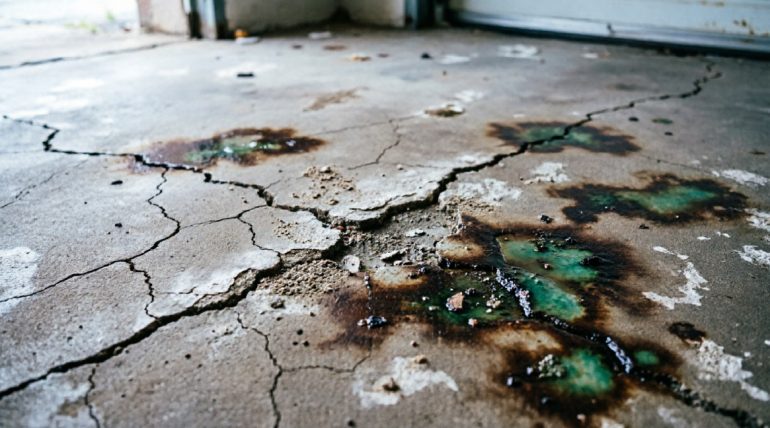
Cons of Bare Concrete: ❌ Dusty: Constantly generates concrete dust
❌ Porous: Absorbs oil, stains, and moisture
❌ Ugly: Gray, dull appearance
❌ Cracks easily: No flexibility
❌ Hard to clean: Stains penetrate deep
❌ Cold: No insulation value
❌ Short lifespan: Deteriorates quickly without protection
Epoxy-Coated Concrete: The Upgrade
Pros of Epoxy Flooring: ✅ Dust-free: Seals concrete permanently
✅ Stain-resistant: Impervious to oil, chemicals, most substances
✅ Beautiful: Unlimited colors, patterns, and designs
✅ Durable: 4x stronger than concrete alone
✅ Easy to clean: Just sweep and mop
✅ Long-lasting: 15-20+ years with proper care
✅ Increases property value: Adds $5-$10 per sq ft to home value
✅ Slip-resistant: Textured options available
✅ Chemical-resistant: Perfect for garages and industrial use
Cons of Epoxy Flooring: ❌ Higher upfront cost than bare concrete
Requires professional installation for best results
❌ 2-3 day installation process
❌ Can be slippery when wet (unless textured)
Head-to-Head Comparison: Epoxy vs Concrete
| Feature | Bare Concrete | Epoxy Coating |
|---|---|---|
| Initial Cost | $0 (existing) | $3-$15/sq ft |
| Lifespan | 5-10 years (deteriorates) | 15-20+ years |
| Maintenance | High (constant dust, staining) | Low (sweep & mop) |
| Durability | Poor (cracks, chips) | Excellent (impact resistant) |
| Appearance | Dull gray | Unlimited options |
| Cleaning | Difficult (porous) | Easy (non-porous) |
| Stain Resistance | Poor | Excellent |
| Property Value | Neutral | Increases value |
| Installation Time | N/A | 2-3 days |
Winner: Epoxy – While bare concrete costs nothing upfront, epoxy pays for itself through durability, low maintenance, and increased property value.
Epoxy vs Tile Flooring
Tile Flooring: The Traditional Choice
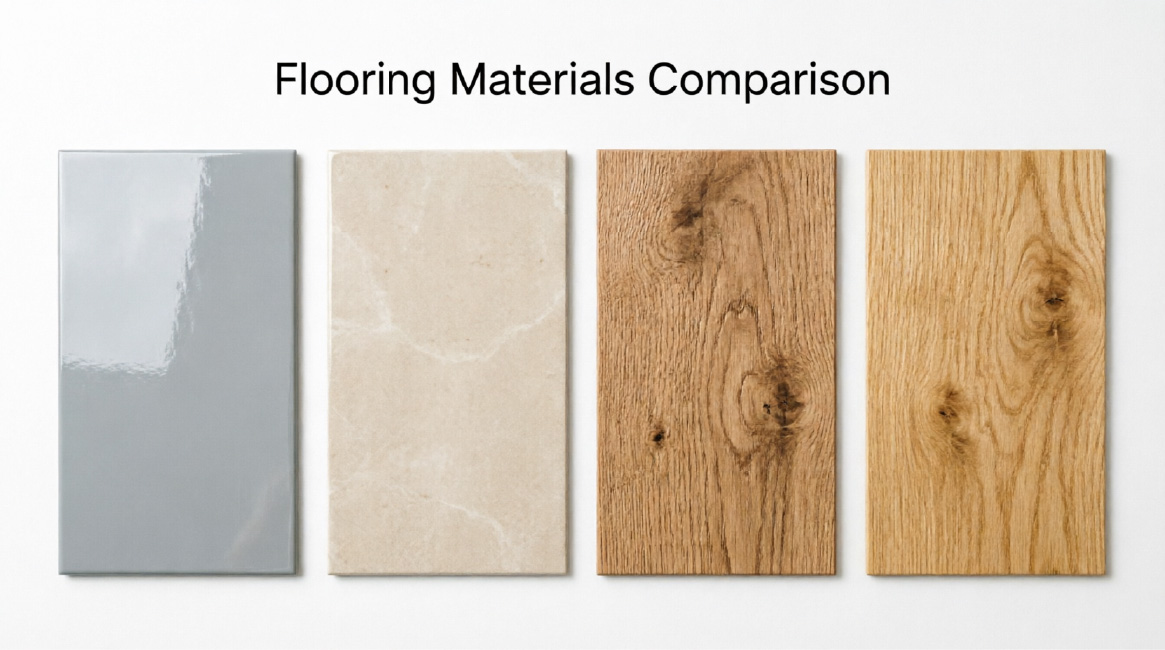
Ceramic, porcelain, and stone tiles have been popular for decades. But how do they compare to modern epoxy?
Pros of Tile: ✅ Wide variety of styles and colors
✅ Can be installed over many surfaces
✅ Good for wet areas (bathrooms, kitchens)
✅ Individual tiles can be replaced
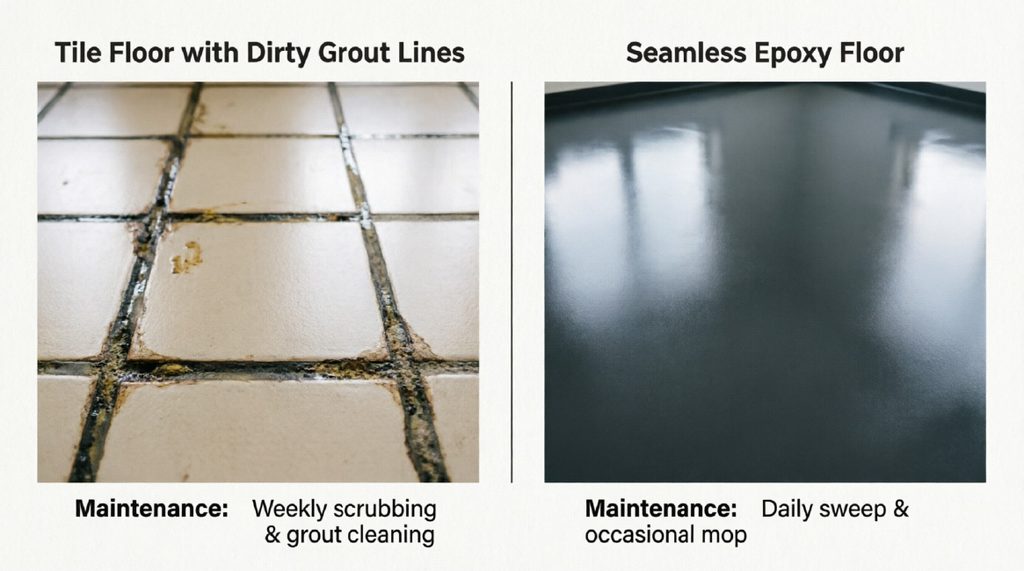
Cons of Tile: ❌ Grout lines: Trap dirt, mold, and bacteria
❌ Cracking: Tiles can crack under impact
❌ Expensive: $5-$20/sq ft installed
❌ Time-consuming installation: 3-7 days
❌ Cold underfoot: No insulation
❌ Slippery when wet: Especially glossy tiles
❌ Difficult repairs: Matching old tiles is hard
Epoxy vs Tile: The Showdown
| Feature | Tile | Epoxy |
|---|---|---|
| Cost | $5-$20/sq ft | $3-$15/sq ft |
| Installation | 3-7 days | 2-3 days |
| Durability | Moderate (cracks) | Excellent (flexible) |
| Maintenance | Moderate (grout cleaning) | Low (seamless) |
| Cleaning | Difficult (grout) | Easy (no grout) |
| Lifespan | 10-20 years | 15-20+ years |
| Water Resistance | Good (if sealed) | Excellent |
| Design Options | Many patterns | Unlimited custom |
Winner: Depends on application
- Garages/Basements: Epoxy wins (durability, no grout)
- Bathrooms: Tile wins (traditional, water-resistant)
- Kitchens: Tie (both work well)
- Commercial: Epoxy wins (easier maintenance)
Epoxy vs Vinyl/LVT Flooring
Vinyl & Luxury Vinyl Tile (LVT)
Vinyl flooring has evolved significantly and is now a popular choice for many applications.
Pros of Vinyl: ✅ Affordable ($2-$7/sq ft)
✅ Easy DIY installation
✅ Water-resistant
✅ Comfortable underfoot
✅ Good for basements
Cons of Vinyl: ❌ Can tear or puncture: Not as durable as epoxy
❌ Shorter lifespan: 10-15 years
❌ Seams: Can allow moisture penetration
❌ Can fade: UV exposure causes discoloration
❌ Lower property value: Doesn’t increase home value like epoxy
Epoxy vs Vinyl Comparison
| Feature | Vinyl/LVT | Epoxy |
|---|---|---|
| Cost | $2-$7/sq ft | $3-$15/sq ft |
| Lifespan | 10-15 years | 15-20+ years |
| Durability | Moderate | Excellent |
| Water Resistance | Good | Excellent |
| Installation | DIY-friendly | Professional recommended |
| Maintenance | Easy | Very easy |
| Property Value | Minimal increase | Significant increase |
Winner: Epoxy for garages/commercial; Vinyl for interior residential
Epoxy vs Hardwood Flooring
Hardwood: The Classic Choice
Hardwood is timeless and beautiful, but is it right for garages or basements?
Pros of Hardwood: ✅ Beautiful, natural appearance
✅ Increases home value
✅ Can be refinished
✅ Timeless appeal
Cons of Hardwood: ❌ Expensive: $8-$25/sq ft
❌ Not moisture-resistant: Warps in damp areas
❌ Scratches easily: Shows wear
❌ High maintenance: Needs refinishing
❌ Not for garages: Can’t handle vehicles or chemicals
Winner: Different applications
- Living areas: Hardwood for beauty
- Garages/Basements: Epoxy for durability
[H2] Cost Comparison: Total Investment Analysis
Upfront Costs (per sq ft)
| Flooring Type | Material | Installation | Total |
|---|---|---|---|
| Bare Concrete | $0 | $0 | $0 |
| Epoxy (Basic) | $2-$4 | $1-$3 | $3-$7 |
| Epoxy (Premium) | $5-$10 | $3-$5 | $8-$15 |
| Tile | $3-$15 | $2-$5 | $5-$20 |
| Vinyl/LVT | $1-$5 | $1-$2 | $2-$7 |
| Hardwood | $5-$15 | $3-$10 | $8-$25 |
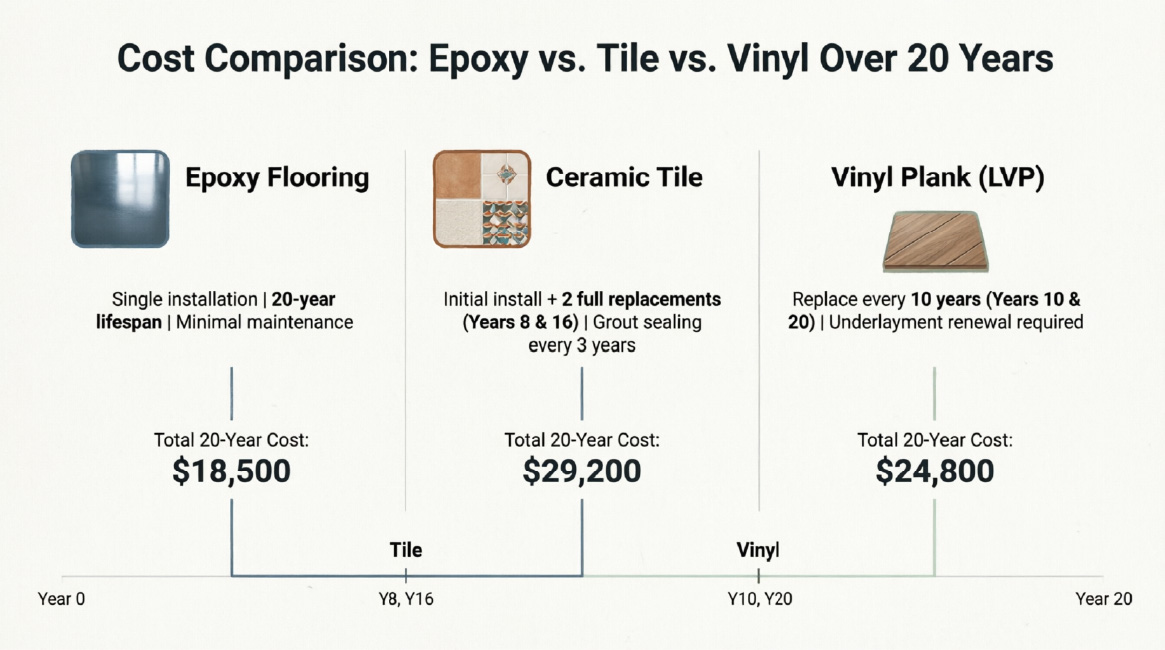
Long-Term Cost Analysis (20 years)
Let’s calculate the true cost of a 400 sq ft garage floor over 20 years:
Bare Concrete:
- Initial: $0
- Sealer every 3 years: $200 x 6 = $1,200
- Crack repairs: $500
- Total: $1,700 (and still looks bad)
Epoxy Flooring:
- Initial installation: $2,400 ($6/sq ft)
- Maintenance: $100 (cleaning supplies)
- Topcoat refresh at year 15: $800
- Total: $3,300 (still looks amazing)
Tile:
- Initial installation: $4,000 ($10/sq ft)
- Grout cleaning/sealing: $300/year = $6,000
- Tile replacement (20% crack rate): $800
- Total: $10,800
Verdict: Epoxy offers the best long-term value
Best Applications for Each Flooring Type
Choose Epoxy For:
✅ Garages (residential & commercial)
✅ Basements (finished or unfinished)
✅ Warehouses & industrial facilities
✅ Showrooms & retail spaces
✅ Commercial kitchens
✅ Pool decks & patios
✅ High-traffic areas
✅ Areas exposed to chemicals or moisture
Choose Tile For:
✅ Bathrooms
✅ Traditional kitchens
✅ Entryways
✅ Decorative accent areas
Choose Vinyl For:
✅ Budget-conscious projects
✅ Rental properties
✅ Temporary solutions
✅ DIY projects
Choose Hardwood For:
✅ Living rooms
✅ Bedrooms
✅ Formal dining rooms
✅ High-end residential (not garages!)
Environmental Impact Comparison
Sustainability Factors:
Epoxy:
- ✅ Long lifespan = less waste
- ✅ Low VOC options available
- ✅ Dust-free = better air quality
- ✅ Reflective surface = energy savings
- ⚠️ Petroleum-based product
Tile:
- ✅ Natural materials (clay, stone)
- ⚠️ Energy-intensive manufacturing
- ⚠️ Heavy = higher shipping emissions
Vinyl:
- ⚠️ Petroleum-based
- ⚠️ Can off-gas VOCs
- ⚠️ Difficult to recycle
Hardwood:
- ✅ Renewable resource
- ✅ Natural material
- ️ Deforestation concerns
- ⚠️ High shipping weight
Winner: Epoxy (when considering lifespan and maintenance)
Installation Time & Disruption
How Long Does Each Take?
| Flooring | Prep | Installation | Cure/Settle | Total Time |
|---|---|---|---|---|
| Epoxy | 1 day | 1-2 days | 3-7 days | 5-10 days to full use |
| Tile | 1 day | 3-5 days | 7 days | 8-12 days |
| Vinyl | Few hours | 1-2 days | Immediate | 1-2 days |
| Hardwood | 1 day | 3-5 days | 7 days | 8-12 days |
Fastest: Vinyl
Best Quality/Time Ratio: Epoxy
Maintenance Requirements
Weekly Maintenance:
Epoxy:
- Sweep: 5 minutes
- Mop: 15 minutes
- Total: 20 minutes/week
Tile:
- Sweep: 5 minutes
- Mop: 20 minutes
- Scrub grout: 30 minutes (monthly)
- Total: 25-30 minutes/week
Vinyl:
- Sweep: 5 minutes
- Mop: 15 minutes
- Total: 20 minutes/week
Hardwood:
- Sweep: 5 minutes
- Damp mop: 15 minutes
- Polish: 1 hour (monthly)
- Total: 25 minutes/week
Winner: Epoxy & Vinyl (tie)
Real Customer Scenarios
Scenario 1: New Homeowner with Garage
Situation: Just bought a home with a boring, dusty concrete garage. Want to create a space for cars and weekend projects.
Best Choice: Epoxy
- Why: Eliminates dust, resists oil stains, creates professional workspace, increases home value
- Cost: $2,400 for 400 sq ft
- ROI: Adds $4,000-$6,000 to home value
Scenario 2: Basement Renovation
Situation: Finishing basement for family room and home gym. Concerned about moisture.
Best Choice: Epoxy or Vinyl
- Epoxy if: Budget allows, want seamless look, moisture is concern
- Vinyl if: Tighter budget, want DIY installation
- Avoid: Hardwood (moisture issues), Tile (cold, hard)
Scenario 3: Commercial Warehouse
Situation: 10,000 sq ft warehouse with forklift traffic. Need durability and safety.
Best Choice: Epoxy (Industrial Grade)
- Why: Withstands heavy equipment, chemical-resistant, easy to clean, safety markings
- Cost: $30,000-$60,000
- ROI: Reduced maintenance costs, improved safety, professional appearance
Making Your Decision: Key Questions to Ask
Before choosing, ask yourself:
1. What’s my budget?
- Tight budget: Vinyl or basic epoxy
- Mid-range: Full flake epoxy
- Premium: Metallic epoxy or high-end tile
2. How long will I stay in the property?
- Short-term (1-5 years): Vinyl or basic epoxy
- Long-term (10+ years): Premium epoxy or tile
- Forever home: Invest in premium epoxy
3. What’s the space used for?
- Garage: Epoxy (no question!)
- Basement: Epoxy or vinyl
- Kitchen: Epoxy, tile, or vinyl
- Living room: Hardwood or luxury vinyl
4. How much maintenance am I willing to do?
- Minimal: Epoxy
- Moderate: Vinyl or tile
- High: Hardwood
5. Do I have moisture issues?
- Yes: Epoxy (moisture barrier) or vinyl
- No: Any option works
The Bottom Line: Why Epoxy Wins for Most Applications
While every flooring type has its place, epoxy flooring offers the best combination of:
✅ Durability – Lasts 15-20+ years
✅ Value – Best long-term ROI
✅ Beauty – Unlimited design options
✅ Functionality – Resists chemicals, stains, impacts
✅ Low maintenance – Easy to clean and maintain
✅ Versatility – Works in garages, basements, commercial spaces
✅ Property value – Increases resale value
Ready to Choose Epoxy?
If you’ve decided epoxy is right for your space, Elite Epoxy Floors is here to help. We offer:
✅ Free consultations – We’ll assess your space and recommend the best system
✅ Transparent pricing – No hidden fees or surprises
✅ Premium materials – Only the highest quality products
✅ Expert installation – Certified technicians with years of experience
✅ Warranty protection – Your investment is protected
✅ Financing options – Flexible payment plans available
Get Started Today!
📞 Call: 551-347-7015
✉️ Email: info@eliteepoxyfloors.us
📅 Schedule Now
Free estimates. No obligation. Expert advice.
Not Sure Which System is Right for You?
Our design consultants will help you choose the perfect epoxy system for your needs and budget.
[Book Your Free Consultation] or call 551-347-7015